

Mobility challenges within a home environment can turn simple daily tasks into significant hurdles. For individuals who retain some leg strength and upper body stability but struggle with the transition from sitting to standing, a specialized solution exists that bridges the gap between dependence and autonomy. A sit to stand lift for home use is not merely a piece of medical equipment; it is a tool that restores dignity, enhances safety, and alleviates the physical burden on family caregivers. These devices are distinct from full-body sling lifts because they are designed for active participation. The user engages their core and legs while the lift provides the necessary assistance to overcome the gravitational challenge of rising. This dual-action approach promotes circulation, muscle engagement, and a faster recovery trajectory for those recovering from surgery or managing degenerative conditions.
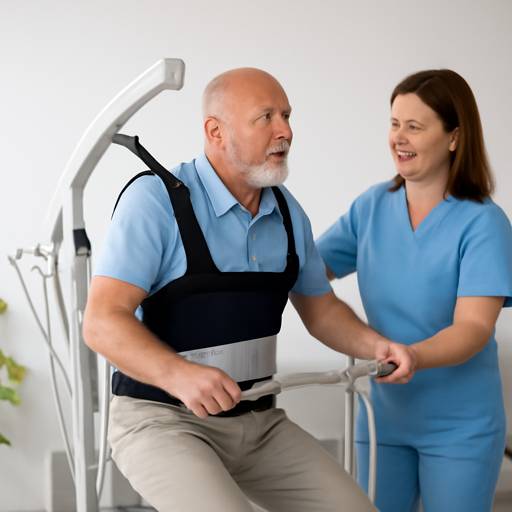
Understanding the mechanics and benefits of these lifts is critical for families navigating home care. At its core, the device operates on a simple, elegant principle: a padded knee block prevents the user from sliding forward, while a support sling (often vest-like) cradles the back and shoulders. As the lift is activated—either manually with a hydraulic pump or via a battery-powered electric motor—the user is gently guided from a seated to a standing position. The home-focused models prioritize compact storage, lightweight frames, and ease of maneuverability through doorways. They are engineered to provide stable support during the most vulnerable part of the transfer: the moment the user’s weight shifts from the chair to their own feet. For caregivers, these lifts eliminate the awkward, destabilizing leaning that often leads to back injuries.
Evaluating the Core Benefits and Functional Mechanics
The primary advantage of integrating a sit to stand lift for home use into a daily routine is the dramatic reduction of caregiver strain. Family members who provide unpaid care often lack the training in proper body mechanics that professional nursing staff receive. Repeatedly lifting a loved one from a low sofa or a wheelchair can lead to chronic back pain, muscle spasms, and even permanent spinal injury. A mechanical lift absorbs the heavy lifting load, allowing the caregiver to guide the transfer with minimal physical effort. This not only protects the caregiver’s health but also extends their ability to provide care over a longer period. The emotional toll is also lessened; the fear of dropping a loved one or causing them pain is replaced by the confidence that the device provides a secure, controlled movement.
From the patient’s perspective, the benefits extend into physiological and psychological realms. Weight-bearing activity is essential for maintaining bone density, joint health, and cardiovascular function. A lift that encourages standing helps combat the deconditioning that occurs with prolonged bed rest or chair confinement. When a patient stands every day, even with assistance, their lungs expand more fully, their digestive system functions better, and their risk of developing pressure ulcers on the sacrum or heels decreases. Furthermore, the ability to stand to transfer to a commode or a shower chair preserves a sense of normalcy and personal hygiene autonomy. The psychological impact of being lifted vertically, eye-to-eye with others, rather than being hoisted horizontally in a sling, cannot be overstated—it fosters a sense of inclusion and human connection that is vital for mental well-being.
Modern home models are designed with safety redundancies that cannot be replicated by manual lifting. Emergency stop buttons, locking casters, and adjustable leg spreads provide a controlled environment for the transfer. The knee pad acts as a pivot point, ensuring the user’s feet remain planted during the ascent. This biomechanical support is particularly crucial for individuals with conditions like Parkinson’s disease, who may experience freezing episodes, or those recovering from total knee or hip replacements, where controlled, partial weight-bearing is prescribed. By choosing a sit to stand lift for home use, families invest in a device that supports the rehabilitation process rather than halting it.
Selecting the Right Lift: Key Features for the Home Environment
Not all sit-to-stand lifts are created equal, and the choice for a home setting must prioritize portability, storage, and battery life. The first decision point is between a manual hydraulic lift and an electric lift. Hydraulic models are less expensive and require no charging, making them reliable in any situation. However, they require physical pumping by the caregiver, which, while easier than lifting the person, still involves some effort. Electric lifts, conversely, offer push-button convenience, often with a handheld pendant control. This is a game-changer for a solo caregiver who must manage the lift while also stabilizing the patient. Battery-powered electric lifts can perform multiple transfers on a single charge, and the low-voltage operation ensures safety in damp environments like a bathroom.
The chassis design is a critical consideration for home navigation. Look for a lift with a narrow base that can pass through standard 36-inch doorways. Some models feature a spreadable base, which widens for stability during the lift and narrows for transport. Weight capacity is another non-negotiable factor. Home lifts typically range from 350 to 450 pounds, but it is essential to select a model that comfortably exceeds the patient’s current weight. The leg opening, or the distance between the upright posts, must be wide enough to accommodate the user’s wheelchair or favorite armchair without interference. Many users forget that the lift must be able to slide into position around the armrests of their existing furniture. A sling with a rigid back support offers more stability for those with poor trunk control, while a vest-style sling is more lightweight and easier to don while seated.
Maintenance requirements are often overlooked. A home lift will endure daily use, so components like casters, hydraulic seals, and battery terminals should be accessible for cleaning and inspection. Look for a lift with tool-free adjustments for the knee pad, leg rest, and base width. This allows the device to be adapted quickly as the patient’s condition changes. Financing and warranty are also practical concerns. A comprehensive warranty that covers the frame, motor, and electronics for several years provides peace of mind. Many suppliers now offer rental options for short-term rehabilitation needs, which can be more economical than an outright purchase. When you are ready to explore specific models tailored for residential care, you can find a durable sit to stand lift for home use that meets rigorous safety and usability standards.
Real-World Application: Case Studies and Daily Integration
To fully appreciate the impact of these devices, it helps to examine specific scenarios where a sit-to-stand lift transforms care. Consider the case of a 72-year-old man recovering from a bilateral knee replacement. His post-operative instructions strictly forbid rotational torque on his new joints, and he must achieve 90 degrees of knee flexion before he can stand unaided. His spouse, a 68-year-old woman with her own arthritic shoulders, cannot physically support his full weight during the transfer from the recliner. Introducing a sit-to-stand lift allowed him to actively straighten his legs under his own power, while the lift handled 60% of his body weight. The knee block prevented his legs from sliding forward, protecting the surgical site. Within two weeks, he was able to decrease the lift support, and within six weeks, he used the lift only for safety during late-night bathroom trips. This is a classic example of a device being used as a rehabilitative stepping stone, not just a permanent dependency aid.
Another common application involves individuals with progressive conditions like multiple sclerosis (MS) or muscular dystrophy. In these cases, the patient’s strength fluctuates daily. On good days, they need minimal assistance; on bad days, they require full support. A sit-to-stand lift easily accommodates this variability. The caregiver can set the lift to provide just enough lift to overcome the fatigue of the day. This flexibility prevents the patient from becoming bedridden on low-energy days, which is a common trajectory for these diseases. The lift essentially allows the patient to continue engaging in standing transfers long after they would have otherwise lost that ability, preserving their independence and reducing the risk of secondary complications like contractures.
Caregivers also report qualitative improvements in their own lives. One home health aide noted that after using a manual lift for three months, her chronic back pain subsided enough that she no longer required chiropractic visits. The financial impact was substantial. More importantly, the emotional safety created by the lift allowed her patient to feel more confident, reducing the anxiety that often precedes a home transfer. The lift became a normal part of the household, folded away under the bed when not in use. Families have also adapted by creating "transfer stations" in key areas: a lift parked near the living room sofa for morning transitions, and a second sling kept in the bathroom for shower chair transfers. This multi-location strategy eliminates the need to carry the lift from room to room, streamlining the daily flow of care. These real-world examples demonstrate that the value of a sit-to-stand lift extends far beyond its mechanical function—it becomes a central pillar of a safe, sustainable home care ecosystem.
